
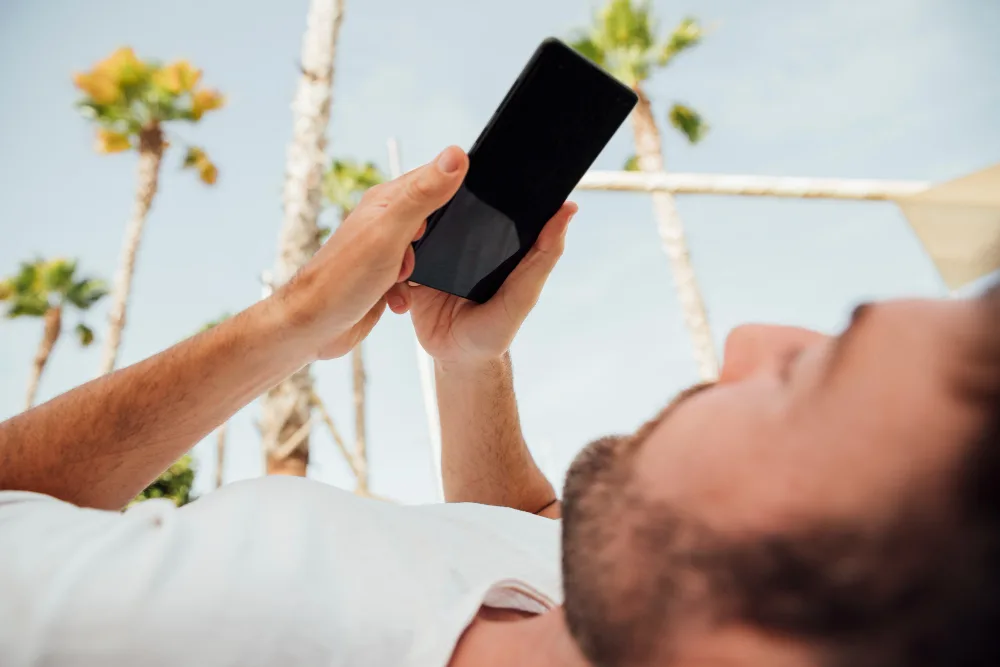
Can You Call 112 Without a SIM Card?
112 – European emergency number
It is well known that 112 is the emergency number to call in case of an emergency. However, the question arises: can you call 112 even without a SIM card in your phone? In this article, we will not only answer this question but also discuss a broader technological context – from the latest smart device solutions to advanced applications of artificial intelligence and blockchain. You will also learn about the repair services offered by Fixas and why it is worth using them.
112 is the unified European emergency number, which is called thousands of times a day in Lithuania. Since Lithuania joined the EU in 2004, this number has replaced old emergency numbers and has become the main way to call the fire department, ambulance, or police with a single call. But will it work if there is no SIM card in the phone? Yes – you can call 112 for free from any phone, even without a SIM card. Normally, you wouldn’t be able to call any other phone number without a SIM card, but 112 is an exception. When dialing the emergency number, the phone connects to any available mobile network tower, regardless of the operator – this allows the call to connect even when your usual operator has no signal in a specific location. Moreover, calls to 112 have the highest priority across all networks, so even during network congestion, emergency calls are handled first.
Operators at the General Emergency Center are at work. In this 112 call center, specially trained staff receive thousands of calls daily and coordinate responses to emergencies in real-time – from gathering initial information to dispatching services.
Interestingly, if you find yourself in an area where your operator’s signal is very weak, the phone will still try to connect to another operator’s tower. In Lithuania, there are practically no areas without any signal – even if there is no 4G or 3G, an older 2G network often operates, through which the call will also be connected. So even in a remote corner, you can reach for help. Additionally, technological solutions for 112 calls allow for the caller’s location to be determined and transmitted to the General Emergency Center (BPC) dispatchers. Location determination is obtained from several sources: base stations (which work even without a SIM card – the connected tower can determine an approximate area) and Advanced Mobile Location (AML), when supported by the device and conditions. AML typically automatically transmits more accurate GPS/Wi-Fi data via SMS/HTTPS, and the accuracy can range from a few meters to several hundred meters, depending on the environment. Such solutions significantly increase the chances of receiving timely assistance.
So, the answer to the question – can you call 112 without a SIM card – is positive. You can call 112 in Lithuania even without a SIM card. Of course, it should be remembered that this number is intended only for emergency calls. It should not be abused or used for inquiries without a real need. Also, if you have the opportunity, it is always better to call – during a voice call, the operator can ask necessary questions and send help more quickly.
SOS messages and automatic accident detection
It is important to know: some of the latest smartphones have additional assistance features. For example, the latest iPhone models (from iPhone 14) allow you to send an SOS message via satellite in critical situations when there is no mobile signal or Wi-Fi. This feature is only supported in selected countries and regions – it is already operational in many European countries, but it is not officially available in Lithuania at this time. This means that when out of signal range in supported countries, the phone connects to a satellite and transmits a distress signal to the nearest emergency center. Additionally, the iPhone 14 series phones and the latest Apple Watch have automatic crash/fall detection: if a strong impact or user fall is detected and there is no response, a call for help is initiated (if there is no signal in supported countries – via satellite). This is a clear example of how modern technology directly contributes to our safety.
Innovations from artificial intelligence to smart devices
Modern technology not only saves lives through emergency services – it is also changing many other areas of our lives. Below, we will review some of the most relevant technological innovations: from artificial intelligence and blockchain to smart devices – phones, computers, tablets, and watches – that impact our daily lives.
The impact of AI technology on daily life
Artificial intelligence (AI) recently seemed like a concept from science fiction, but today it is becoming an integral part of the technology world. AI is defined as the ability of computer systems to perform tasks that typically require human intelligence – learning, understanding language, recognizing images, making decisions. Many of us encounter AI daily without even noticing: virtual assistants (such as Siri or Google Assistant) understand voice commands, Netflix and Spotify recommend content using AI analysis, and email systems filter spam using smart algorithms.
In the picture – a humanoid robot with a screen (an example of artificial intelligence technology in the real world). Such robots can recognize faces, voices, and communicate with people; they demonstrate how far artificial intelligence research has advanced. Recently, generative artificial intelligence has received a lot of attention – systems that can create content. For example, text AI models can write an article, essay, or even programming code based on user prompts, while image generation programs create pictures from descriptions. Platforms like ChatGPT (for text generation) or Midjourney (for image generation) have amazed the world with their capabilities. AI is already used in translation, medical image analysis (diagnosing diseases from pictures), autonomous vehicles (helping vehicles navigate independently), and many other fields.
Of course, with the development of AI come new challenges. Society is discussing the ethical aspects of artificial intelligence – how to ensure that AI decisions are unbiased, how to protect privacy and data. There is also consideration of what impact AI will have on the job market – whether it will replace some professions by automating tasks or create a demand for new specialties. Despite the challenges, it is clear that artificial intelligence will continue to evolve and integrate even more into our daily lives. AI algorithms are already helping to optimize city traffic, predict natural disasters, and create personalized learning programs for students.
It can be confidently stated that AI is a modern tool changing the world. Its capabilities are constantly expanding, and it is only a matter of time before artificial intelligence becomes as commonly used as we use smartphones today. It is important to keep an eye on this field, as innovations in AI can benefit both businesses (by automating processes, increasing efficiency) and each of us (more convenient daily solutions, assistants in everyday life, etc.).
Decentralized database and its applications
In the last decade, we often hear the term blockchain, especially when talking about cryptocurrencies like Bitcoin or Ethereum. But what is blockchain essentially? Simply put, it is a decentralized database that operates on the principle of distributed ledger. Imagine a large digital book that records all transactions or operations that have occurred, and this book is held not in one place but simultaneously in thousands of computers. When a new entry is recorded (a new block is created), it is linked to the previous block using cryptographic methods. As a result, it is practically impossible to change or forge information – attempting to edit one block would require changing all subsequent blocks in all thousands of copies of the book simultaneously, which is technically almost unfeasible.
Illustration: a blockchain of data blocks – a network of connected blocks, where each block stores information and is linked to the previous one. This decentralized method of data storage ensures the immutability and security of information.
Blockchain technology gained popularity due to cryptocurrencies – it ensures that, for example, Bitcoin transaction records are public, transparent, and unalterable. Anyone can view the public transaction chain, but no one can forge it. However, blockchain is far from being limited to cryptocurrencies. Today, this technology is applied in many fields where data reliability, security, and transparency are important.
The financial sector is actively implementing blockchains for international payments and contract management (the term “smart contracts” has even emerged, where contract execution is automated on the blockchain network). In supply chain management, blockchains help track the journey of goods from manufacturer to seller – all intermediate stages are recorded in a common chain, allowing the consumer to verify that, for example, the food product they purchased is authentic and not expired. Healthcare is another area where blockchain is applied for storing patient records, ensuring that data is protected but easily accessible to authorized individuals when needed. Even government institutions are experimenting with voting systems on the blockchain, aiming to create a secure and transparent electronic voting system where votes cannot be forged.
Of course, blockchain technology is still young and faces certain challenges. One of them is high energy consumption, especially in the case of early public blockchains (like Bitcoin), where complex mathematical calculations are used to ensure network security (“Proof of Work”). Some solutions also suffer from scalability – that is, the ability to process a very large number of transactions in a short time. However, new protocols are being developed, such as “Proof of Stake,” and second-level solutions (e.g., the Lightning Network in the Bitcoin network), which significantly reduce energy requirements and increase speed.
Despite this, the possibilities for blockchain applications are nearly limitless. This technology is fundamentally suitable wherever reliable, distributed data record storage is needed. It is no wonder that it is called revolutionary – similar to the internet a few decades ago. Perhaps soon you will encounter blockchain yourself – for example, using digital identity or loyalty points managed by a blockchain system.
Innovations in mobile communication
Today, smartphones are the daily companions of many people. The evolution of phones over the past ~15 years has been astonishing: from the first touch screens to the current powerful devices that replace cameras, navigation, music players, and even computers. Manufacturers introduce new models every year, competing for better cameras, higher performance, and brighter screens. However, consumers care not only about innovations but also about the durability and longevity of devices.
The screen is perhaps the most important and vulnerable part of the phone. Manufacturers are implementing tougher glasses (e.g., Gorilla Glass Victus) that are resistant to scratches and breaks. Some devices have water and dust resistance (IP68), allowing them to withstand immersion in water. However, in reality, many of us have experienced the misfortune of dropping our phones and cracking the screen. Even the most expensive models are not invulnerable – both the iPhone X and the Samsung S21 Ultra screens can break from an unfortunate fall. In such cases, professional screen replacement is useful. For example, replacing the screen of an iPhone 8 Plus or Samsung S21 Ultra at a service center restores the device’s original appearance and functionality. Specialists replace the cracked glass with a new, original, or high-quality analog and ensure that the touch-sensitive layer works flawlessly. It is important to entrust screen replacement to an experienced technician – modern phones are constructed very compactly, so amateur disassembly can cause more damage.
Another noticeable trend is larger screens. A few years ago, a 5-inch screen was standard, but now even mid-range phones have ~6,5-inch or larger screens. To make such devices comfortable to use, manufacturers are reducing screen bezels and creating curved edges. Foldable phones (e.g., Samsung Galaxy Z Fold) have also emerged, where the screen can be folded in half – this is a new direction that allows for a tablet-sized screen that folds into a pocket-sized device. Although first-generation foldable screen phones had durability issues, technology improves with each generation.
Another important aspect is the battery. What is a smartphone without a good battery if it runs out in the middle of the day? Battery technology is gradually improving: new phones have larger capacity batteries (4000–5000 mAh has become the standard), more efficient processors, and advanced power management. Fast charging allows you to charge the phone to ~50% in half an hour, and some manufacturers offer wireless and reverse charging (the phone can act as a wireless charger for other devices). However, batteries wear out over time: after ~2 years, most phone batteries noticeably hold a charge for a shorter time. Fortunately, this can be fixed – battery replacement can extend the device’s life for several more years. For example, iPhone battery replacement is popular among users who do not want to buy a new phone every year. It is important that the work is done by specialists and that quality, model-specific parts are used – low-quality batteries can overheat or swell.
Speaking of innovations, it is worth mentioning software advancements. Modern phones regularly receive OS updates that provide new features and ensure security. Cameras are becoming “smarter” – with the help of AI, they capture quality photos, recognize scenes, people, and automatically adjust settings. 5G connectivity has already become commonplace, and privacy and security are strengthened by biometric methods (fingerprint, facial recognition) and data encryption.
In summary, the smartphone sector is one of the most dynamic technology markets. Everyone wants a reliable, fast, and durable device. However, even the most perfect phone can break or malfunction. In such cases, it is important to know where to turn – we will discuss this at the end of the article by introducing Fixas services. But first, let’s briefly talk about innovations in computers, tablets, and wearable devices.
Trends in the computer and tablet sector
Although today many tasks are performed by phones, personal computers remain essential for work, study, and creativity. Recent years’ trends in computers are heading in several directions: increasing performance, mobility, and specialization. Laptops are becoming lighter and thinner, yet their power is increasing. Ultrabooks have emerged – very thin but powerful laptops suitable for business and everyday tasks. Meanwhile, gaming enthusiasts are offered specialized gaming laptops with high-end graphics cards and cooling systems. Processor manufacturers (e.g., Intel, AMD, Apple with M1/M2/M3 chips) introduce new chips every year that improve speed and energy efficiency. The decreasing prices of RAM and SSD have made it possible to standardize 16 GB or more RAM, while SSDs significantly speed up OS and application performance.
Desktop computers have also improved – modern mini PCs can be very compact yet powerful due to new cooling solutions. Workstations designed for professionals remain larger, with many coolers, but efficiency and specialized AI acceleration modules (e.g., tensor cores in GPUs) needed for 3D, video processing, and machine learning are emphasized here.
Tablets occupy an intermediate niche between phones and laptops. In recent years, tablets have regained popularity among students and professionals who need to take notes, read documents, or draw comfortably. Modern tablets, such as the iPad Pro or Samsung Galaxy Tab S series, have high-resolution screens, support styluses, and their processors rival those of laptops. They are often bundled with keyboard cases, turning the tablet into a mini laptop. Cloud services allow for seamless work across different devices.
Software is also evolving: new OS (e.g., Windows 11, macOS) better utilize hardware, offer a more user-friendly interface, and deeper cloud integration. More and more attention is being paid to security – protections against malware, firewalls, and disk encryption (BitLocker, FileVault) are implemented.
Despite all the innovations, even the most reliable computers face failures or wear and tear. Computer repair remains a sought-after service. Often, laptops overheat due to dust and start shutting down – cleaning the cooling system and replacing thermal paste helps. Hard drive or SSD failure can result in data loss, but specialists can attempt to recover information and replace the disk. More complex failures (motherboards) require diagnostics and soldering work. Since modern thin laptops are difficult to repair at home (many glued parts, non-standard screws), it is better to turn to reliable technicians. Fixas engineers, whom we will discuss shortly, can help with both technical and software issues – from screen or keyboard replacement to virus removal or OS optimization.
In the picture – a repair specialist working on computer components. Even the most modern computers sometimes require professional maintenance: dust cleaning, parts upgrading, or troubleshooting. Experienced technicians ensure that after repair, the device works like new.
In summary, innovations in the world of computers and tablets allow us to work faster and more conveniently. However, it is worth taking care of the equipment you have – regularly clean dust, update software, and if it breaks down – do not wait and turn to repair specialists. This way, your computer or tablet will serve longer and more efficiently.
Useful technology on your wrist
In recent years, smartwatches have transformed from a niche curiosity into a popular accessory and useful device. These small devices, worn on the wrist, do much more than just tell the time. A smartwatch can track our health, notify us of incoming messages, assist in sports, and even perform some phone functions completely independently.
In the picture – a smartwatch (Huawei model). Modern smartwatches monitor user activity, heart rate, sleep quality, and display notifications from the phone. Some models also have advanced features, such as EKG measurement or built-in GPS for route tracking.
Health monitoring is one of the biggest benefits of smartwatches. Most models track steps, calories burned, and measure heart rate in real-time. Popular watches like the Apple Watch or Fitbit alert you if your heart rate becomes too high or too low at rest. Newer models can even perform an electrocardiogram (EKG), detecting signs of atrial fibrillation. Others measure blood oxygen levels (SpO₂) – a feature that gained popularity during the pandemic. Sleep tracking allows you to find out how much time you spend in deep and REM sleep phases and provides tips on how to improve rest.
Sports enthusiasts particularly appreciate water resistance, integrated GPS, and accurate route, speed, and altitude readings. Specialized apps provide training statistics, progress, and even create individual plans. Garmin, Polar, and Suunto are well-known brands among athletes, offering durable watches with large batteries to withstand even ultramarathons.
Connectivity options are another aspect. Initially, watches acted as phone accessories, but now more and more models with eSIM technology can operate independently. For example, you can leave your phone at home and run with just the watch – if someone calls, you can answer on the watch, and if necessary, you can call or send a message yourself. The latest versions of Apple Watch and Samsung Galaxy Watch have this capability. Some models even have music storage, allowing you to listen to music through Bluetooth headphones without the phone.
Wearable devices are also integrated into the emergency assistance ecosystem. As mentioned, the Apple Watch has a fall detection feature – upon detecting a sudden fall and receiving no response, the watch automatically calls for help at 112 and transmits the location (if available). This has already helped save lives for seniors or active individuals. Other manufacturers are implementing similar solutions – for example, Garmin has incident detection, which sends a help message through the connected phone.
Battery life remains a challenge for the most powerful watches – with bright screens, they often last 1–2 days, so they need to be charged almost every night. More economical models or hybrid watches can last a week or longer. For example, some Fitbit or Garmin models last 5–7 days, while some smart bracelets can last even over 2 weeks.
Aesthetics and personalization are another reason why watches have become popular. You can change watch face designs, and straps can be adapted for different occasions: silicone for sports, leather or metal for business meetings. This way, one device easily adapts to different situations.
In summary: smartwatches are a great example of how technology can be integrated into our lives conveniently and unobtrusively. They help take care of health, stay reachable, capture memories, and even come in handy in critical situations. In the future, it is likely that the capabilities of wearable devices will expand even further – perhaps smart rings, clothing with sensors, or other solutions will emerge. Technological progress does not stop, so it will be interesting to see what the coming years will bring.
Professional repair services for your devices
No matter how advanced our devices are, sometimes they need repair or maintenance. A broken screen, a weak battery, a faulty charging port, or software issues – all of these can be resolved by turning to professionals. Fixas is a repair center for phones, computers, and other electronics, ready to help. Our experienced technicians quickly diagnose faults and eliminate them with quality. Only verified parts are used, and a warranty is provided for the work, so you can be assured about your device.
Why choose Fixas? First of all, we value every customer – we aim to complete repairs as quickly as possible, and minor tasks (e.g., screen or battery replacement) are often done the same day. Secondly, our specialists continuously improve their knowledge, keeping up with the latest technologies, so whether it’s a brand new iPhone or an older Huawei model – we have the skills and equipment to repair them. Thirdly, transparent pricing – we agree on the price in advance, explain which parts will be replaced, so you avoid surprises.
Fixas offers the following repair services:
- Smartphone screen replacement: professional repair of screens for various models, including iPhone 7, iPhone X, iPhone 8 Plus, Samsung S21 Ultra, Samsung A50, Huawei P30 Lite, and many others. After replacement, the device will display images like new, and the touch-sensitive layer will work flawlessly.
- Battery replacement: replacing old batteries with new ones, giving the device a “second breath” and longer operating time without charging. A popular service is iPhone battery replacement, but we replace batteries for phones, tablets, and even laptops from all manufacturers.
- Repair of other phone components: we repair and replace charging ports, cameras, speakers, microphones, buttons, back covers, and other elements.
- Computer repair: we solve software and hardware issues – from virus removal to cleaning cooling systems and replacing keyboards.
- Tablet and other device repair: we repair tablets, smartwatches, navigations, and other small electronics.
Our service is located in a convenient place in Vilnius, Savanorių pr. 22, so we are easy to find. The Fixas team is always ready to consult – if you are unsure about your device’s malfunction or just want to discuss upgrade options, feel free to drop by or call. You can find all contact information and more details on our website.
In short, we live in a wonderful time when technology is rapidly advancing and providing us with new opportunities. However, let’s not forget to take care of our existing technology. If your phone or computer breaks down, there’s no need to give up – it’s better to entrust it to professionals. Fixas will ensure that your device works like new again, allowing you to continue enjoying all the benefits of modern technology!
Conclusion
The 112 number works even without a SIM card, and the latest technologies ensure our safety in various situations. Technological progress is changing our lives – from AI to blockchain, innovations in smartphones, computers, tablets, and watches are constantly evolving. Despite this, it is important to take care of the maintenance of your devices. Trust Fixas – a reliable partner in the repair field, who will help you solve any malfunctions.
Need help with your device?
If your phone, computer, or tablet is not working properly, bring it to Fixas. We perform quick diagnostics and usually complete repairs within 1–3 hours.