
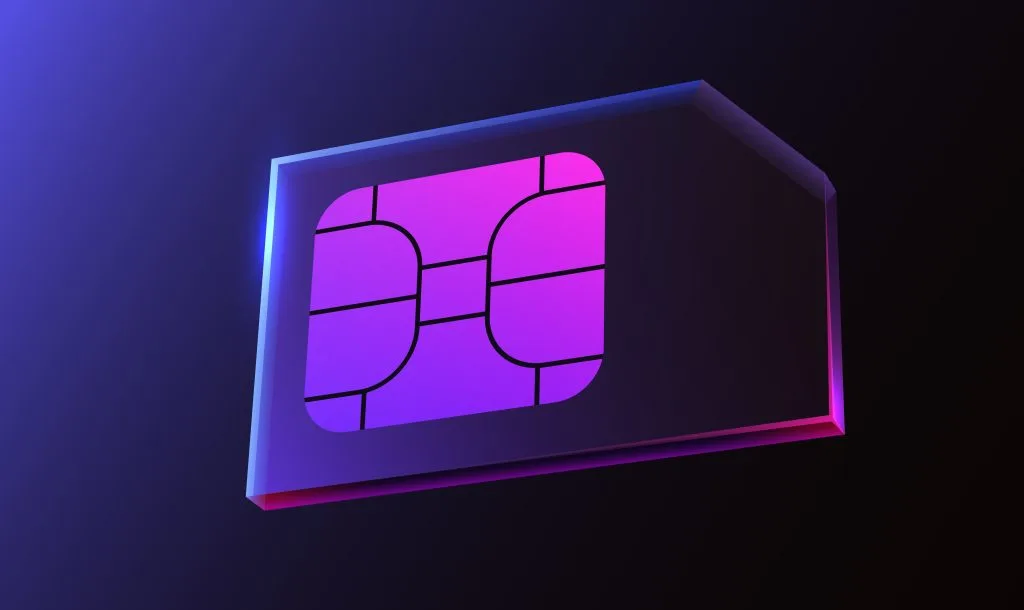
What is eSIM and How Does It Work?
eSIM: A Revolutionary Mobile Communication Technology
Summary
The emergence of the embedded Subscriber Identity Module – eSIM – technology has fundamentally changed the use of mobile communication by eliminating the need to change or physically hold SIM cards. This text systematically discusses the origins of eSIM, its operating principles, deployment models (GSMA RSP), advantages, risks, and future development directions. Attention is also given to the practical impact in Lithuania: widespread operator support in phones, watches, and IoT solutions, remote activation, the ability to have multiple profiles on one device, and reduced material costs. The rapid spread of eSIM increases user convenience, fosters innovation, and allows operators to manage networks more efficiently.
The emergence of eSIM technology and the need for innovation
The mobile communication ecosystem is rapidly changing: data traffic is increasing, the number of connected devices is growing, and users are traveling and switching operators more frequently. Physical SIM cards limited flexibility – one had to wait for delivery, change cards, or carry multiple ones. eSIM, as an integrated module (eUICC) within the device, solved these inconveniences: profiles are installed over the air (OTA), operators can be changed remotely, and devices become more resistant to dust and water as there is no need for a separate slot. Below is a concise yet comprehensive overview of the technology based on the realities of the Lithuanian market and best practices.
From physical SIM cards to embedded eSIM
The history of SIM is a continuous miniaturization and expansion of functionality: from full-size cards to mini, micro, and nano-SIM. The next qualitative leap is eSIM, where SIM functionality is integrated directly into the device’s hardware (eUICC). For the user, this means fewer physical actions and more digital flexibility: a profile can be obtained via a QR code or through the operator’s app, and multiple numbers (work/personal or local/travel) can be maintained on one device.
How does eSIM work and what does it offer?
Integrated chip
eSIM is a secure chip integrated into the device (eUICC) that stores and cryptographically protects mobile communication profiles and the EID identifier.
Remote SIM provisioning (RSP)
GSMA’s “Remote SIM Provisioning” (RSP) allows profiles to be downloaded and activated remotely (OTA) – usually by scanning a QR code provided by the operator or through the operator’s account/app.
Multiple network profiles
One device can have multiple operator profiles and conveniently switch the active one (e.g., local number and travel data plan). Some phones also support “Dual SIM Dual Standby” (eSIM + physical SIM or two eSIMs).
Enhanced security
Profiles are stored in secure memory protected by hardware mechanisms, reducing the risk of counterfeiting and mechanical damage. Additionally, if the device is lost, the profile can be remotely removed or restored on a new device according to the operator’s established procedure.
Main advantages of eSIM in mobile communication
Convenience
Operators can be changed or a new number added without a physical card – just a QR code or a few taps in the settings are enough. This is especially convenient when traveling or testing different plans.
Space-saving
By eliminating the SIM slot, manufacturers create more moisture/dust-resistant casings, and the saved space can be used for batteries or additional components.
Improved security
There is no risk of losing or damaging the card when changing trays; profiles are protected by hardware security measures, and access is managed at the OS level.
Enhanced connectivity
Ideal for IoT scenarios: mass remote profile deployment, simpler operation for logistics, smart meters, telemetry.
Environmental benefits
Less plastic, less packaging, and logistics – eSIM reduces waste compared to physical cards and their delivery.
What difficulties arise with eSIM technology?
Limited network support
Although support is rapidly expanding, not all operators or all plan types (especially specific business/prepaid) uniformly offer eSIM everywhere. Regional differences remain.
Device compatibility
Older models do not support eSIM, and some manufacturers limit the number of simultaneously active eSIM profiles. It is worth checking compatibility and transfer options before migrating.
Regulatory issues
Countries set their own identification and number portability rules; eSIM implements them remotely, but users may still need to verify their identity and comply with local requirements.
User awareness
Some users have not yet tried eSIM or do not know that a number/plan can be linked in a few steps – hence clear communication and instructions from operators are important.
Different areas of eSIM usage
Telecommunications
Users can easily add or change plans, separate work and personal numbers, and in watches, “one number” type solutions work – calls and SMS can be made without carrying a phone.
Internet of Things (IoT)
eSIM is particularly convenient for IoT projects: profiles are deployed en masse, devices are easier to maintain, and hundreds or thousands of sensors can be managed centrally – from smart meters to transport telemetry.
Consumer electronics
Smartphones, tablets, watches, and even some computers integrate eSIM – reducing dependence on plastic cards, allowing users to connect faster, and enabling multiple profiles on one device.
Where is the development of eSIM technology heading?
The development of eSIM will accelerate: manufacturers will implement more dual-active (DSDS) scenarios, operators will improve remote activation without QR codes, and users will increasingly choose travel data plans directly from the device.
Widespread operator support
eSIM is expected to become the default option in many new devices, with local operators offering more plans with eSIM and convenient remote number portability.
Integration with 5G
Together with 5G, eSIM will allow new tariffs and network features (e.g., local/temporary plans at events or during travels) to start faster.
Expansion of the Internet of Things (IoT)
In large-scale IoT deployments, eSIM will become the standard – making it easier to manage fleets, monitor device status, and change profiles without physical access.
Regulatory changes
Administrative processes (identification, number portability, remote activation) will continue to be simplified so that everything happens faster and 100% remotely for the user.
eSIM: The beginning of new opportunities in the mobile communication world
eSIM is a mature and practical technology that provides real convenience: quick activation, flexibility of multiple profiles, reliable security, and a smaller environmental impact. Although compatibility and regulatory nuances remain, operator support and device offerings continue to expand, strengthening the role of eSIM in mobile communication in Lithuania and worldwide.
Literature and references
Communications Regulatory Authority (2021). “Model for the Use of Integrated Subscriber Identity Modules (eSIM) in Lithuania” – study. Retrieved from https://www.rrt.lt/parengta-esim-naudojimo-skatinimo-lietuvoje-studija/
Communications Regulatory Authority (2023-03-01). Reminder to users: remote activation and changing providers. Retrieved from https://www.rrt.lt/priminimas-vartotojams-ar-jau-isbandete-esim-technologija/
Communications Regulatory Authority (2023-08-04). Growth of eSIM cards and IoT/M2M share. Retrieved from https://www.rrt.lt/per-pusmeti-esim-korteliu-skaicius-ugtelejo-131-proc/
Telia Lithuania. eSIM in phone and tablet – information and compatibility. Retrieved from https://www.telia.lt/privatiems/kitos-paslaugos/esim-telefone
Tele2 Lithuania. eSIM in phone and “One Number” solution. Retrieved from https://tele2.lt/privatiems/esim-telefone
, https://tele2.lt/pagalba/paslaugos/esim-ir-vienas-numeris/kas-yra-esim-paslauga
BITĖ Lithuania. eSIM services and activation instructions. Retrieved from https://www.bite.lt/esim
, https://www.bite.lt/profai/kas-yra-esim
GSMA. Remote SIM Provisioning (RSP) guidelines and eSIM ecosystem. Retrieved from https://www.gsma.com
Need help with your device?
If your phone, computer, or tablet is not working properly, bring it to Fixas. We perform quick diagnostics and usually complete repairs within 1–3 hours.